
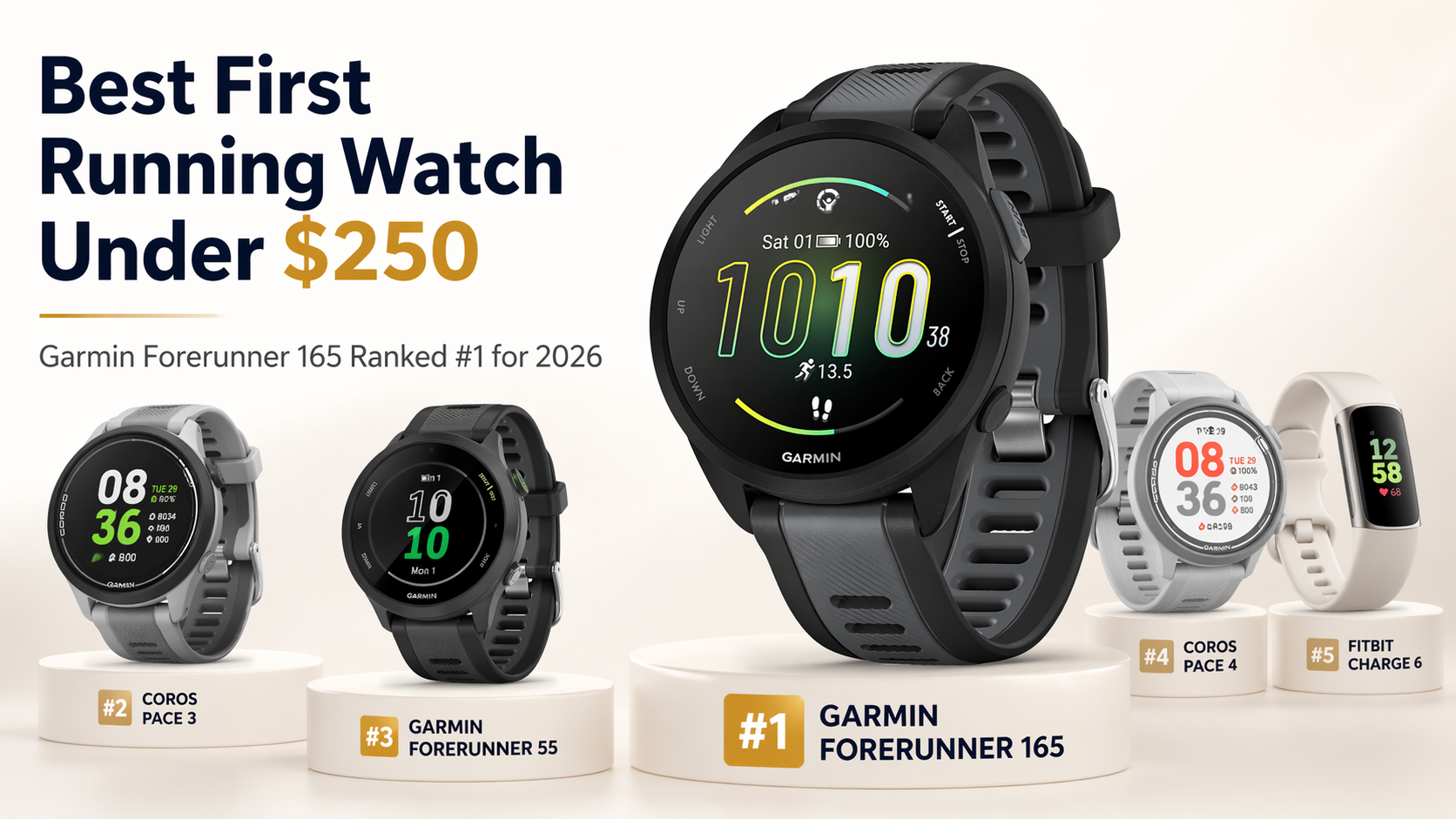
Quick Ranking
Short version: buy the Garmin Forerunner 165. It is the easiest first real running watch to live with, and it is still good enough that you will not want to replace it in three months.
- Garmin Forerunner 165 — Best Overall — Check Price
- COROS Pace 3 — Best Value for Battery and Training Features — Check Price
- Garmin Forerunner 55 — Best True Beginner Pick — Check Price
- COROS Pace 4 — Best If You Want the Newer COROS — Check Price
- Fitbit Charge 6 — Best If You Mostly Want a Fitness Tracker — Check Price
Your first real running watch does not need maps, triathlon mode, or a dashboard that looks like NASA had a baby with Strava. It needs to be easy to use, accurate enough for normal training, and good enough that you will not outgrow it right away.
Prices move fast. Street prices and official list prices below were checked on April 29, 2026. Re-check the current deal before you buy, but the ranking logic is stable.
Last reviewed: May 2026 · Next review: July 2026
How We Ranked
This list is not trying to crown the most advanced watch under $250. It is trying to answer a simpler question: if you are moving up from your phone, a cheap smartwatch, or a Fitbit-style tracker, which watch actually makes running easier?
- Ease of use: clear screens, clean buttons, simple workout starts, and apps that do not make a first-time buyer feel lost.
- Real running utility: built-in GPS, pace and distance you can trust, enough battery for several runs between charges, and training features that matter.
- Price discipline: if a watch drifts over the cap in real current pricing, it does not belong in the main ranking.
- Beginner honesty: tracker-style devices can make sense, but they should not be pretending to be the same tool as a Forerunner or COROS Pace.
- Not outgrown too fast: the winner needs to make sense for the next year of running, not just the next two weeks.
If you want the full editorial methodology, start with How We Review Fitness Tech.
Quick Specs Snapshot
| Watch | Typical Price | GPS Battery | Display | Weight | Payments |
|---|---|---|---|---|---|
| Garmin Forerunner 165 | $170.15 | 19 hours | 1.2-inch AMOLED, 390 x 390 | 39g | Yes |
| COROS Pace 3 | $199.00 | 38 hours | 1.2-inch Memory LCD, 240 x 240 | 30g | No |
| Garmin Forerunner 55 | $142.62 | 20 hours | 1.04-inch MIP, 208 x 208 | 37g | No |
| COROS Pace 4 | $249.00 | 41 hours | 1.2-inch AMOLED, 390 x 390 | 32g | No |
| Fitbit Charge 6 | $102.56 | 5 hours | 1.04-inch AMOLED, 184 x 276 | Not listed | Yes |
The Best First Running Watches Under $250
#1 Garmin Forerunner 165 — Best Overall
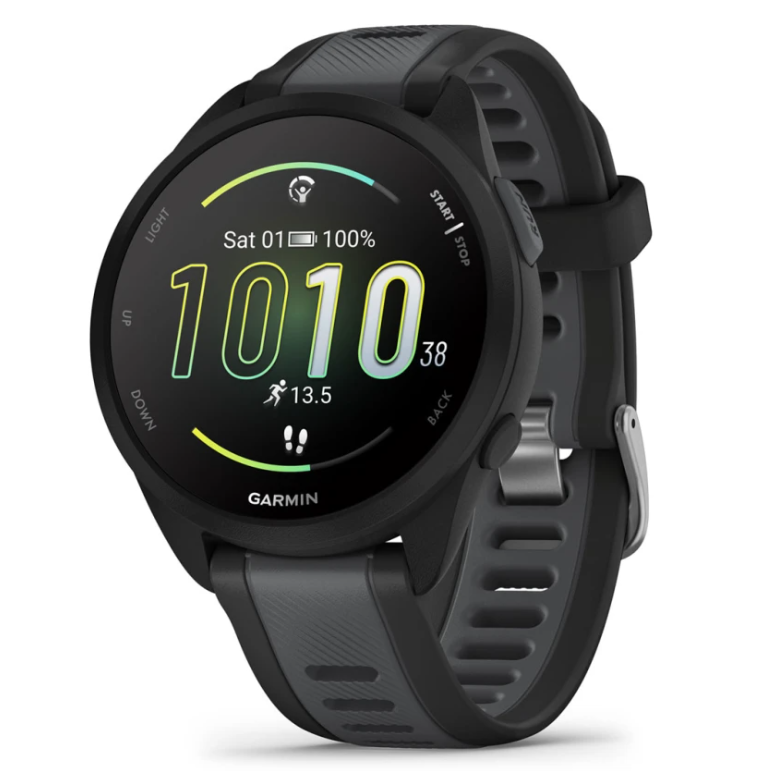
Verdict: This is the one I would hand to the most people buying their first real running watch. The Forerunner 165 does not win on raw battery or raw GPS hardware, but it wins the beginner brief better than anything else here: bright AMOLED screen, simple Garmin app setup, daily suggested workouts, Garmin Coach plans, Garmin Pay, and just enough training depth to feel serious without becoming homework.
Pros:
- AMOLED display is easier to read and less intimidating than the old-school budget-watch look.
- Garmin Coach, daily suggested workouts, and the broader Garmin ecosystem make it the easiest on-ramp.
- Garmin Pay and a more complete daily-driver feature set than the Forerunner 55 or either COROS watch.
- Still light at 39g, with 19 hours of GPS battery and 11 days in smartwatch mode.
Cons:
- Single-band GPS is the main reason it does not beat the Pace 3 on pure value.
- No onboard music storage, so it is not a fully loaded premium watch — though for most beginners Garmin Pay and training guidance matter more.
- If you can get a Forerunner 55 much cheaper, the 165 stops looking like the obvious budget answer.
Best for: New runners who want one watch that feels friendly on day one and still makes sense six months later.
If you want the hard comparison calls behind this ranking, start with Forerunner 165 vs COROS Pace 3, then read Forerunner 55 vs Forerunner 165 for the clean Garmin-only decision.
#2 COROS Pace 3 — Best Value for Battery and Training Features
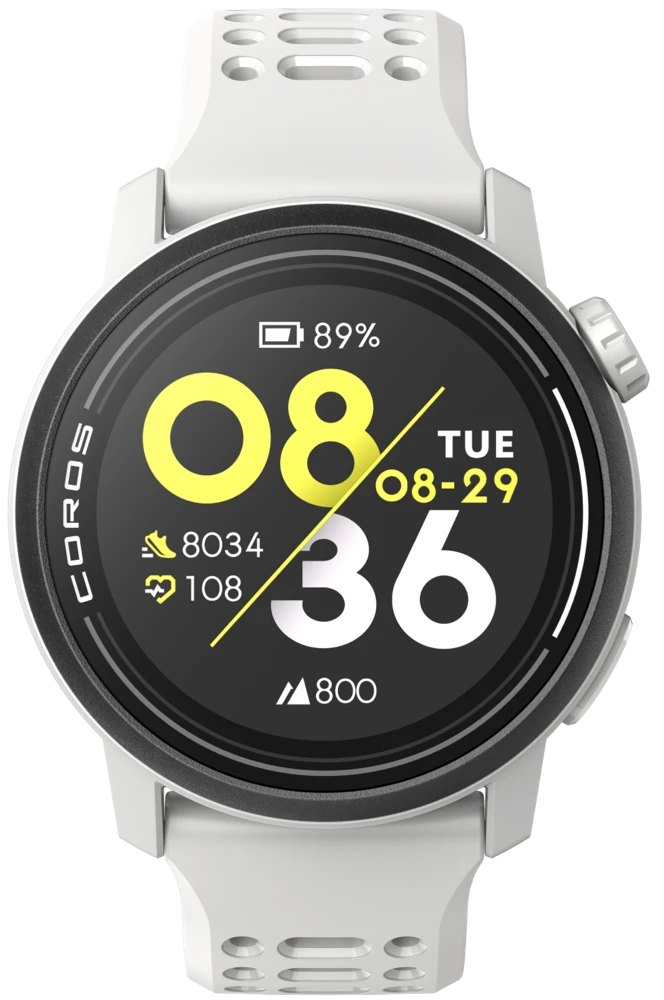
Verdict: The Pace 3 is the value killer of this roundup. At roughly the same price as the Forerunner 165, you get multi-band GPS, a 38-hour GPS battery, a featherweight 30g build, and a training-first feature set that is still way more serious than most first-time runners actually need. The reason it sits behind the 165 is not hardware. It is polish. Garmin is still the easier first watch for the average beginner. But if you care about battery and GPS hardware more than ecosystem comfort, the Pace 3 is the better buy.
Pros:
- 38 hours of GPS battery at this price is absurdly strong.
- Multi-band GPS is still rare and genuinely useful in a sub-$250 watch.
- 30g on the wrist feels almost invisible.
- Structured training, solid COROS training software, and no fake-smartwatch bloat.
Cons:
- No NFC payments, which makes it feel more tool-like than lifestyle-friendly.
- The screen is practical, not exciting.
- If the Pace 3 is unavailable or priced too close to the Pace 4, the newer watch becomes the smarter COROS buy.
Best for: Buyers who want the most real running hardware for the money and do not care about Garmin polish.
The two useful follow-ups are Forerunner 55 vs COROS Pace 3 and COROS Pace 3 vs COROS Pace 4.
#3 Garmin Forerunner 55 — Best True Beginner Pick
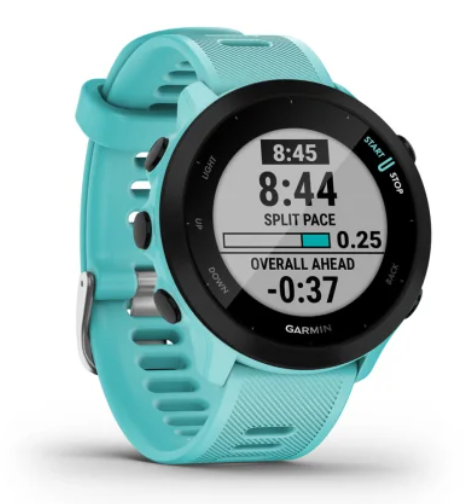
Verdict: The Forerunner 55 is not the best watch here. It is the cleanest beginner watch here. If someone says, “I just want a simple Garmin that does real running stuff and does not turn into a side hobby,” this is still the answer. The 55 is a much sharper value pick than it was at full MSRP — current street pricing is around $143, well under the $200 tier the watch was designed against, and that is exactly the price level where this pick stops being conditional.
Pros:
- Easy buttons, simple menus, and a low-friction Garmin experience.
- 20 hours of GPS battery and two weeks of smartwatch battery are still practical.
- Garmin Coach and enough training structure for a true first running watch.
Cons:
- No AMOLED, no Garmin Pay, no music, and a more dated sensor stack.
- If pricing climbs back near $200, the 165 and Pace 3 close the gap quickly.
- It feels like an entry watch from the previous generation because that is exactly what it is.
Best for: Someone who wants the simplest possible Garmin running watch at the cheapest credible price — at roughly $143, that is exactly what the 55 is right now.
Read Forerunner 55 vs Forerunner 165 if you are trying to stay in Garmin land, and Forerunner 55 vs COROS Pace 3 if you are deciding whether the extra hardware is worth paying for.
#4 COROS Pace 4 — Best If You Want the Newer COROS
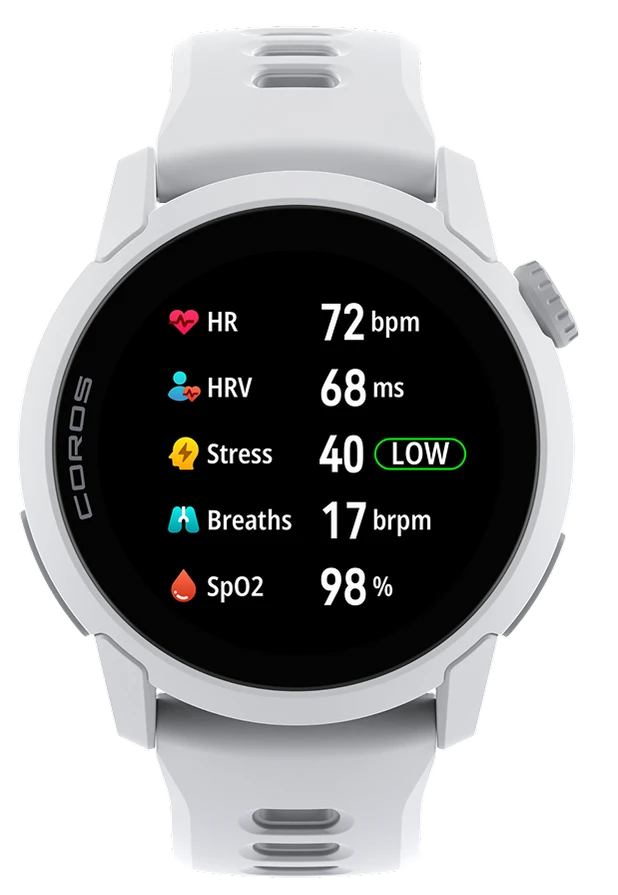
Verdict: I originally wanted to keep the Pace 4 in the near-miss bucket because it nudges this article toward a spec-nerd fight. Current pricing changes that. If it is still sitting at $249, it is under the cap, it is relevant, and it deserves to be here. You get AMOLED, multi-band GPS, a 41-hour GPS battery, and the newer COROS package. On pure hardware, the Pace 4 is the most capable watch on this list — if price did not matter within the $250 cap, it would be the overall winner. It still ranks fourth because this article is about a first running watch, not the flashiest spec sheet. The Forerunner 165 is easier for most beginners. The Pace 3 is the better pure value play. But the Pace 4 is the COROS buy if you want the newer hardware and do not mind paying right up to the cap.
Pros:
- AMOLED plus multi-band GPS under $250 is an unusually strong combination.
- 41-hour GPS battery is better than anything else in this roundup.
- It is the obvious upgrade path if the Pace 3 price gap gets too small.
Cons:
- At $249 it is no longer the clean value answer. That is still the Pace 3.
- No NFC payments, and still less beginner-friendly than Garmin on setup and training guidance.
- It can pull the piece away from the “first watch” promise if you overthink the spec sheet.
Best for: Buyers who want a newer COROS with AMOLED and longer battery, not the easiest beginner experience.
If you are on the fence between the two COROS watches, read COROS Pace 3 vs COROS Pace 4 before you do anything else.
#5 Fitbit Charge 6 — Best If You Mostly Want a Fitness Tracker
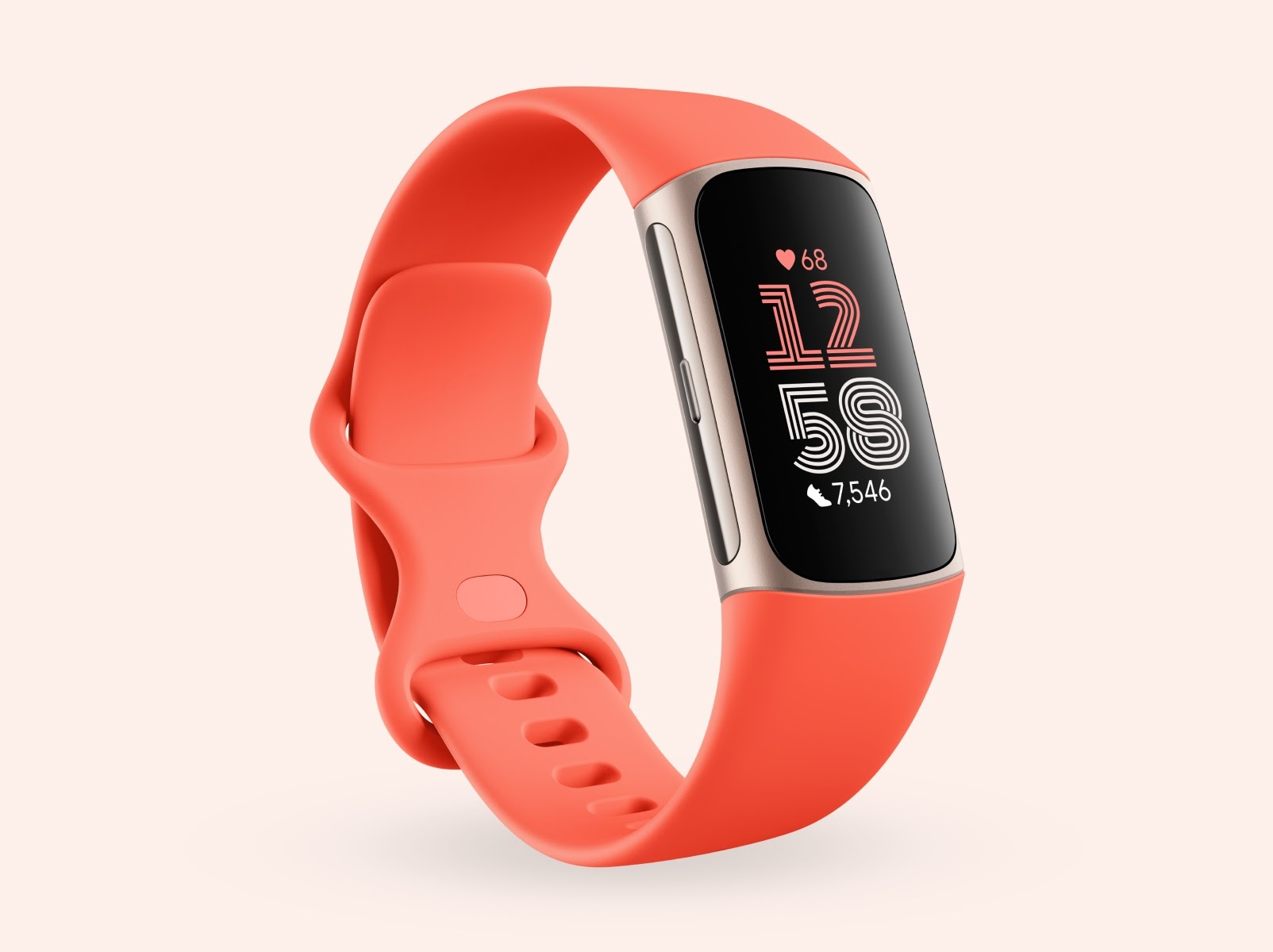
Verdict: The Charge 6 is here because real beginners actually buy it, not because it is secretly the fifth-best running watch. It is the right pick for the person who wants to track occasional runs, walks, sleep, heart rate, and everyday activity in one slim device. At current street pricing around $103, the gap to a real running watch is wider than it looks on paper — almost $70 below the Forerunner 165 and roughly $40 below the Forerunner 55 — so if you genuinely just want a tracker, the value case is sharp. It is still the wrong pick for the person who wants clear mid-run pace data, button-first controls, and a watch that feels built around running first. That distinction matters.
Pros:
- Cheaper than every real running watch on this list.
- Comfortable, slim, and easy to wear all day and all night.
- Google Wallet, broader health-tracking appeal, and a lower intimidation factor for mainstream buyers.
Cons:
- 5 hours of GPS battery is the obvious limitation.
- It is a tracker first, not a running watch first.
- If you already know you care about pace, workouts, or button control during sweat and rain, skip it.
Best for: Someone graduating from casual activity tracking, not someone trying to get serious about run training.
The most useful related reads are Fitbit Charge 6 vs Inspire 3 and Garmin Vivoactive 5 vs Fitbit Charge 6, because both explain why a slim tracker is a different buying decision from a real running watch.
Who Should Skip This List
If you already know you want maps, trail tools, or premium triathlon features, this is the wrong roundup. Go upmarket. And if you already know you hate touchscreens during sweaty runs, do not let bright AMOLED screens sweet-talk you into the wrong watch.
The broader rule is simple: a first real running watch should make running easier, not make you feel like you enrolled in a certification program. That is why the Forerunner 165 wins and why the Charge 6 stays in the tracker-exception lane.
What We Didn’t Include
- Polar Pacer: I like the watch, but current official pricing no longer cleanly fits an under-$250 roundup. If it drops back into the low-$200s, it re-enters the fight immediately.
- Suunto Run: promising, but too new for me to rank confidently over the more proven picks above.
- Amazfit Bip 5: fine for cheap activity tracking, not what I would call a first real running watch.
FAQ
Is a Fitbit good enough for a beginner runner?
It can be good enough for someone who is starting with short runs and mostly wants a health tracker, and at current pricing around $103 the value case for the Charge 6 is sharper than the table prices alone make it look. It is still not the same thing as buying a running watch built around buttons, pace screens, and better workout structure.
Should a first-time runner buy Garmin or COROS?
Buy Garmin if you want the friendlier onboarding and training guidance. Buy COROS if you care more about battery life and raw GPS value for the money.
Is multi-band GPS worth it under $250?
Yes, if you run in dense areas, care about cleaner pace data, or just want more hardware value for the money. No, if what you really want is the easiest possible beginner experience and you trust Garmin’s simpler setup more.
Is the Forerunner 55 too old now?
Not too old to work. Too old to pay full price for without hesitation. At current street pricing around $143, the discount is real, and that is when the 55 turns into a standout pick rather than a near-miss.
What if the Pace 3 is hard to find?
If the Pace 3 is unavailable or priced too close to the Pace 4, buy the Pace 4 instead. The value argument only works if the price gap is real.
Last updated: April 29, 2026. We may earn a commission if you buy through links on this page. Prices move, and retailers change bundles and colors all the time, so always confirm the current listing before you buy.
