
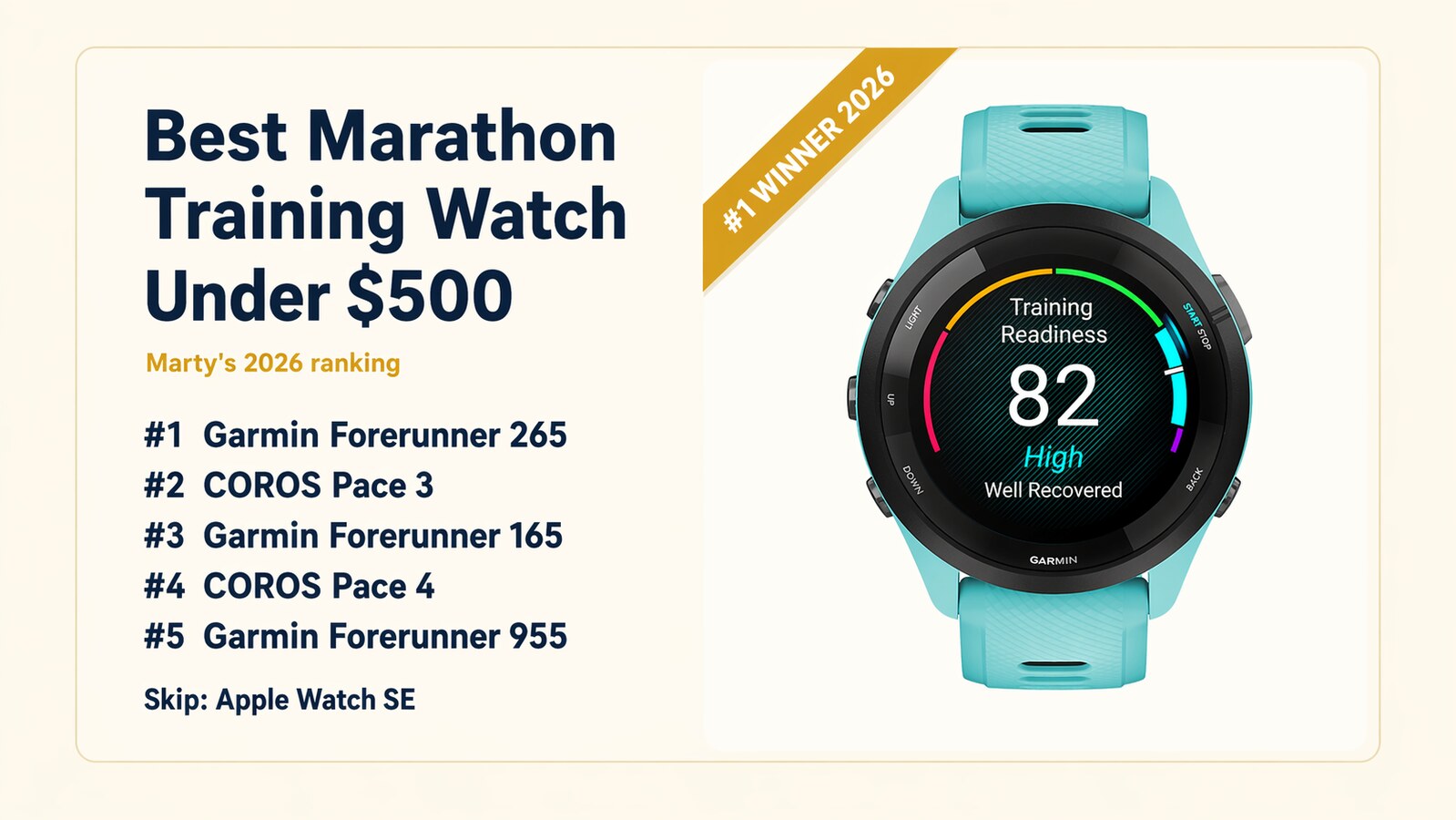
Quick Ranking
Short version: buy the Garmin Forerunner 265. It is the only watch under $500 that gives you multi-band GPS, an AMOLED screen, and Garmin’s actually-useful training brain — Training Readiness, PacePro, and Race Widget predictions — all in one package. You will not regret it on race morning.
- Garmin Forerunner 265 — Best Overall — Check Price
- COROS Pace 3 — Best Value — Check Price
- Garmin Forerunner 165 — Best Garmin for First-Time Marathoners — Check Price
- COROS Pace 4 — Best AMOLED Bargain — Check Price
- Garmin Forerunner 955 — Best for Marathoners Who Also Run Trails — Check Price
Anti-pick: Apple Watch SE 3. Lovely smartwatch, wrong tool for serious marathon prep.
Most “best running watch” lists are too polite to be useful. They rank by feature count and call it a day. Marathon training is not a feature-count problem. It is a confidence problem: can this watch hold pace data I trust during a tempo run, survive a long run without dying, and tell me whether to push or back off tomorrow? That narrows the field fast.
Prices move fast. Street prices below were checked on April 24, 2026 — always re-check current deals before you buy, but the pecking order is stable.
How We Ranked
This is not a generic smartwatch ranking. Every pick was judged as a marathon-training tool, weighted heavily on the things that matter when your week includes tempo work, long runs, race-pace sessions, and a real taper.
- GPS trust: Multi-band GPS (L1+L5) matters because pacing data you cannot trust will wreck an otherwise good workout. Single-band gets a strike.
- Battery in GPS mode: If a watch sweats over a 4-hour long run or race day, it does not belong near the top.
- Training intelligence: Daily readiness scores, structured workout support, race-pace strategies, recovery tracking. The watch should help you train better, not just collect numbers.
- Price discipline: A watch does not earn extra points for costing more. It has to justify the gap.
- Buyer fit: “Best value” and “best Garmin for a first-time marathoner” are not the same shopper, so they get separate slots.
Quick Specs Snapshot
| Watch | Price | GPS Battery | GPS Type | Display | Weight |
|---|---|---|---|---|---|
| Garmin Forerunner 265 | $349.99 | 20 hours | Multi-band | 1.3-inch AMOLED, 416 x 416 | 47g |
| COROS Pace 3 | $199.00 | 38 hours | Multi-band | 1.2-inch Memory LCD, 240 x 240 | 30g |
| Garmin Forerunner 165 | $199.99 | 19 hours | Single-band | 1.2-inch AMOLED, 390 x 390 | 39g |
| COROS Pace 4 | $249.00 | 41 hours | Multi-band | 1.2-inch AMOLED, 390 x 390 | 32g |
| Garmin Forerunner 955 | $459.99 | 42 hours | Multi-band | 1.3-inch MIP, 260 x 260 | 52g |
The Best Marathon Training Watches Under $500
#1 Garmin Forerunner 265 — $349.99
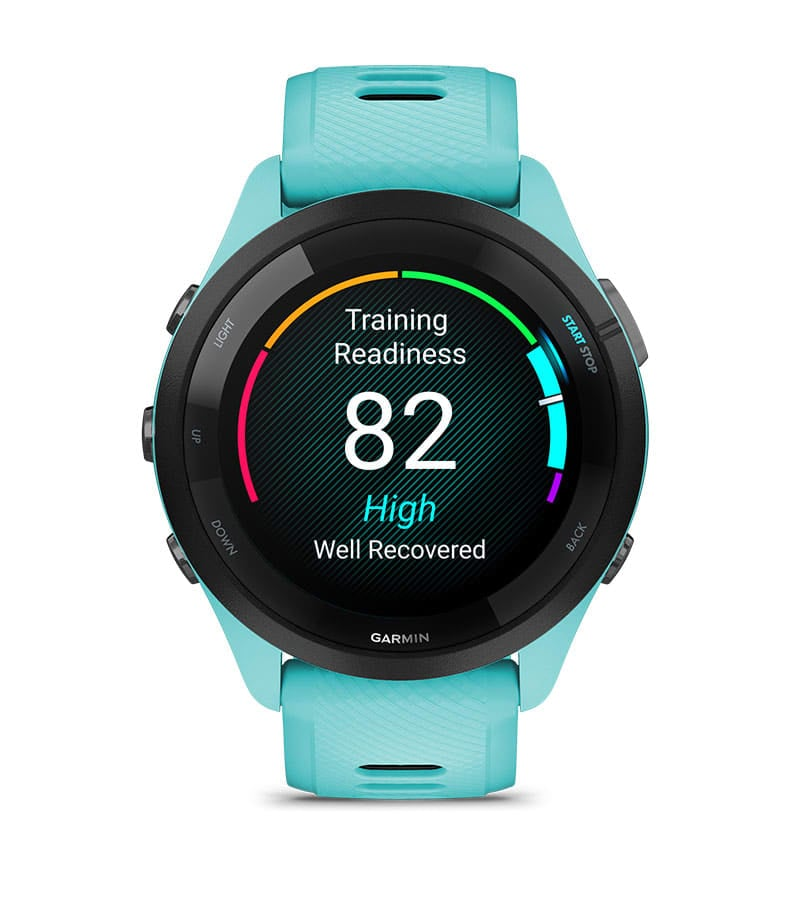
Verdict: The adult answer. At $349.99, the Forerunner 265 is the only watch under $500 that pairs multi-band GPS and an AMOLED screen with Garmin’s full training brain — Training Readiness (a daily score that actually tells you whether to push or recover, blending HRV, sleep, and load), PacePro (race-pace strategies that adjust for elevation), and Race Widget predictions that recalibrate as your training progresses. Add Running Dynamics with a chest-strap HRM-Pro and you are getting cadence, vertical oscillation, and ground contact time — the metrics that actually shape form work. Nothing else on this list has all of that under one cap.
Pros:
- Training Readiness, PacePro, and Race Widget — Garmin’s three best marathon-specific tools, all on this watch.
- Multi-band GPS plus a 20-hour GPS battery makes it race-day safe for the vast majority of marathon use.
- 1.3-inch AMOLED display is bright, sharp, and the upgrade most buyers will actually feel daily.
- Garmin Pay, 8GB music storage, and the deepest accessory ecosystem in running.
Cons:
- Roughly $151 more than the COROS Pace 3 — real money if you do not care about AMOLED or ecosystem.
- Battery is fine, not class-leading; if you measure watches in days-of-uptime, look at #5.
Best for: Marathoners who want the best all-around training watch under the cap, not the cheapest one.
For the head-to-heads: start with Forerunner 265 vs COROS Pace 3, then Forerunner 265 vs COROS Pace 4 if you are deciding between Garmin depth and newer COROS value.
#2 COROS Pace 3 — $199
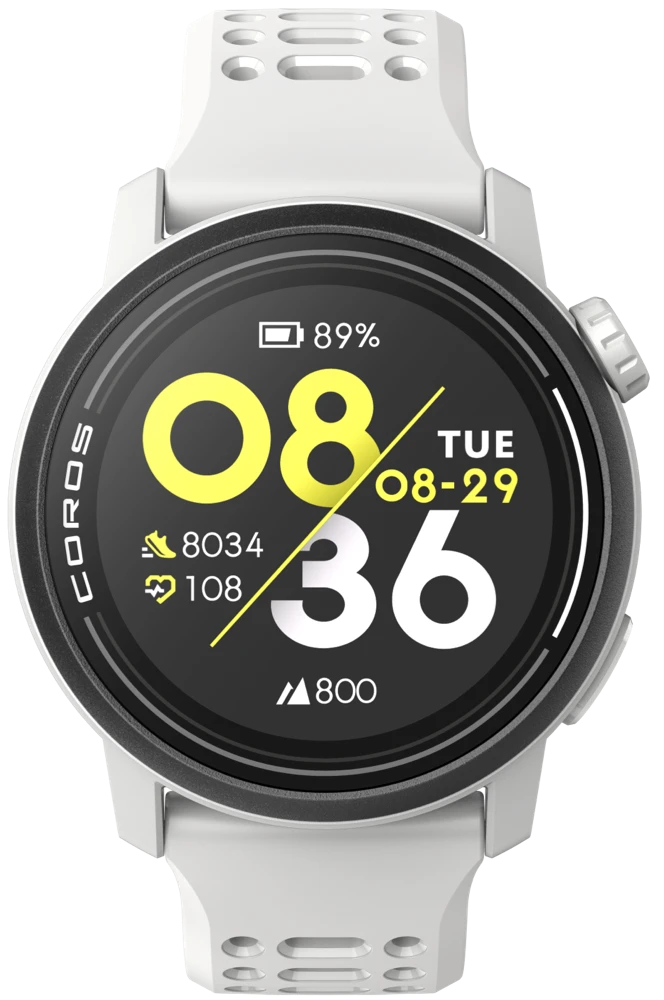
Verdict: The value assassin. At $199, the Pace 3 keeps multi-band GPS, an absurd 38-hour GPS battery, and a 30-gram build that genuinely vanishes on the wrist during long runs. EvoLab — COROS’s training-load and base-fitness layer — is not as polished as Garmin’s, but it is honest and functional. The reason it ranks above the Garmin Forerunner 165 (same price) is simple: better GPS hardware and better battery, full stop. Garmin owns the ecosystem fight; COROS wins the spec fight at this price.
Pros:
- 38 hours of GPS battery is ridiculous at this price — long runs do not register.
- Multi-band GPS at $199 is genuinely category-breaking.
- 30 grams. You will forget it is on your wrist.
- Native wrist-based running power and chest-strap support out of the box.
Cons:
- Memory LCD screen is practical (great in sun) but unexciting next to AMOLED.
- No NFC payments — feels more training tool than do-everything watch.
- EvoLab is functional, not the Garmin training-readiness experience.
Best for: Runners who care more about pace data and battery than screen glamor.
The two essential supporting reads: Forerunner 165 vs COROS Pace 3 explains why it beats the 165 on value, and Forerunner 265 vs COROS Pace 3 explains why it still loses to the 265 overall.
#3 Garmin Forerunner 165 — $199.99
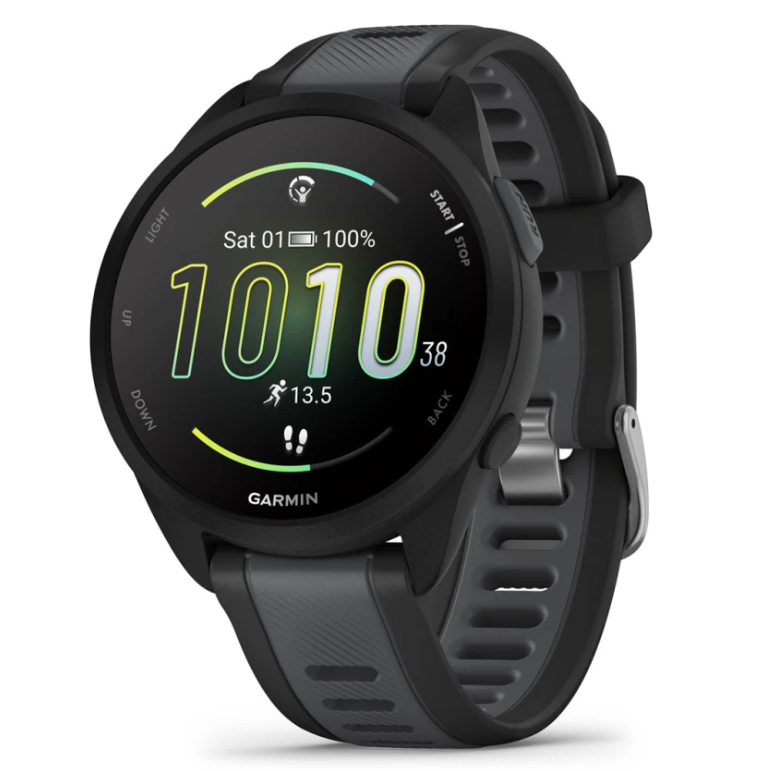
Verdict: This is the Garmin-first pick for new marathoners, not the value king. The 165 has a smaller, friendlier slice of the Garmin ecosystem — adaptive training plans, daily suggested workouts, basic recovery and training effect — without the price tag of the 265. AMOLED at $199.99 is a real selling point, and Garmin Pay sweetens the daily-driver case. But you are giving up multi-band GPS, which is the one spec a serious marathoner should not give up cheaply. That is why the Pace 3 wins on value, and the 165 wins on “I want Garmin and I want it now.”
Pros:
- AMOLED screen at $199.99 — friendlier than older bargain training watches.
- Garmin Pay, daily suggested workouts, and the familiar Garmin Connect experience.
- 39 grams stays light enough for daily training and racing.
Cons:
- Single-band GPS — the main reason it sits behind the Pace 3.
- 19-hour GPS battery is fine, not special.
- No Training Readiness, no PacePro — those features are gated behind the 265.
Best for: First-time marathoners who know they want Garmin and do not want to pay Forerunner 265 money.
If you are stuck on the same-price debate, Forerunner 165 vs COROS Pace 3 is the clearest explanation of why the 165 is the Garmin-first pick rather than the pure value pick.
#4 COROS Pace 4 — $249
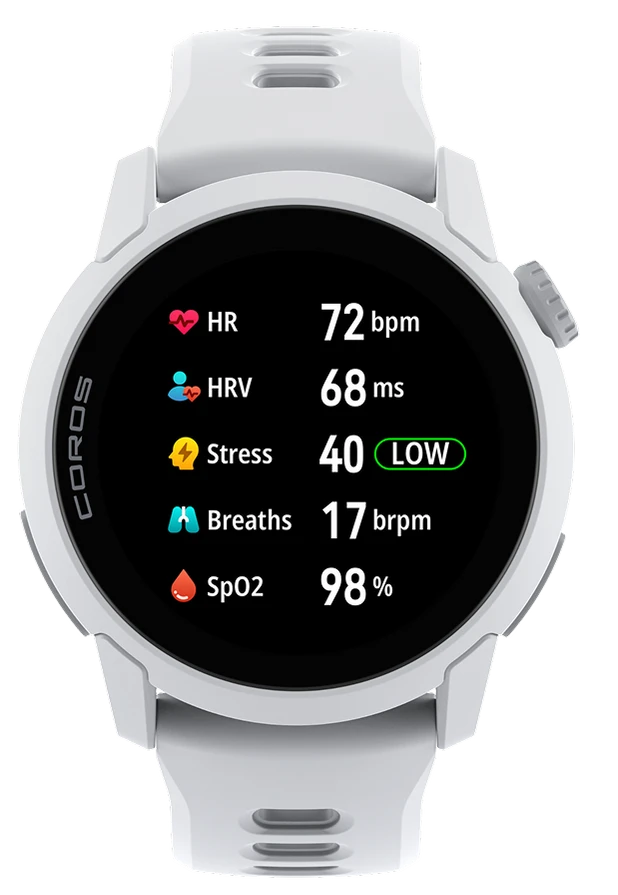
Verdict: The “wait, this is only $249?” watch. The Pace 4 layers AMOLED, multi-band GPS, a microphone and speaker, and 41 hours of GPS battery on top of the Pace 3 formula. Genuinely strong hardware. It still ranks behind the Forerunner 165 because this article is judging marathon-training guidance, not just raw hardware. The 165 gives newer runners Garmin Coach, daily suggested workouts, familiar Garmin Connect analysis, and a simpler path from first training block to race day. The Pace 4 has the flashier spec sheet; the 165 is the easier guided-training buy.
Pros:
- AMOLED + multi-band GPS at $249 is one of the best spec sheets on this list.
- 41 hours of GPS battery is real long-run and ultra-curious territory.
- Microphone and speaker make it feel less stripped down than the Pace 3.
Cons:
- No NFC payments still hurts as a daily driver.
- EvoLab vs Garmin’s training stack is a real gap if you want hand-holding.
- Newer release, smaller third-party accessory ecosystem than Garmin.
Best for: Buyers who want the newer COROS package and care about AMOLED without jumping near $400.
For supporting context: COROS Pace 3 vs COROS Pace 4 first, then Forerunner 265 vs COROS Pace 4 for the cross-brand fight.
#5 Garmin Forerunner 955 — $459.99
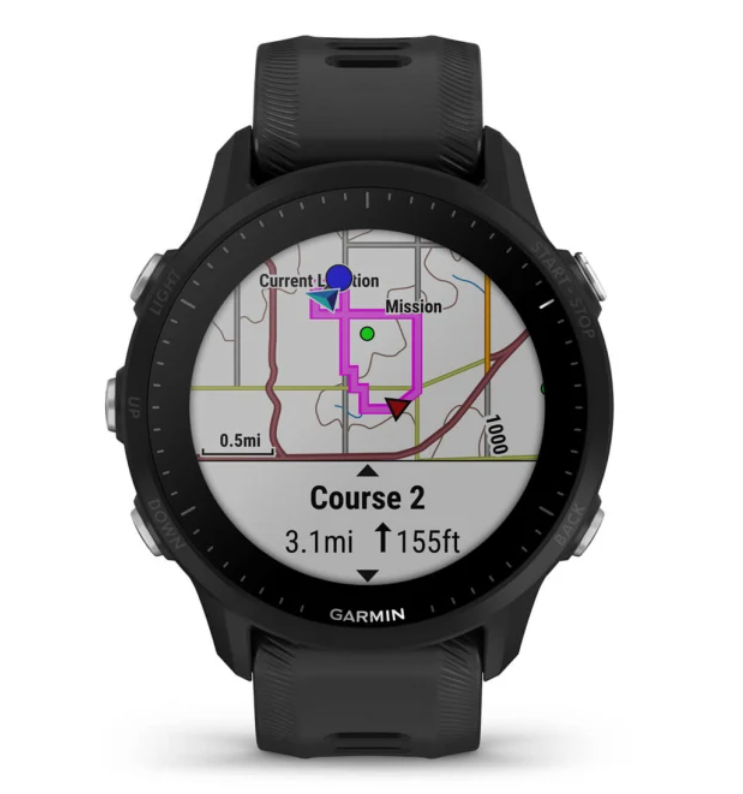
Verdict: If your marathon training overlaps with trail routes, ClimbPro will pay for the upgrade by itself. The 955 brings 42-hour GPS battery, multi-band GPS, full topographic maps, and 32GB of storage — features built for the runner whose long run is a 20-mile loop with 2,000 feet of climbing. For pure road marathoners, the 265 is the cleaner pick at $110 less. But if “marathon training” in your world means mountains and getting lost on purpose, this jumps to #1 fast.
Pros:
- 42 hours of GPS battery is the battery monster of this list.
- Multi-band GPS, 32GB storage, and full topo maps with ClimbPro.
- MIP screen is genuinely excellent in bright sun on long outdoor days.
Cons:
- $459.99 is right at the ceiling — paying for trail features road marathoners do not need.
- MIP screen looks dated next to the 265’s AMOLED.
- 52 grams is the heaviest watch on the list.
Best for: Marathoners whose training includes trails, routes, or long unsupported sessions where battery and maps matter more than AMOLED.
If that sounds like you, Forerunner 955 vs Fenix 7 makes the battery-and-adventure case better than any generic roundup.
Who Should Skip This List
Apple Watch SE 3 is the anti-pick. Not because it is a bad smartwatch — it is genuinely fine for messages, notifications, and casual fitness. It is the wrong job. An 18-hour all-day battery and roughly 8 hours of GPS is workable for casual running, but it leaves too little margin once long runs, race morning, and real GPS dependence are all on the calendar in the same week.
Cons (for marathon training specifically):
- Roughly 8 hours of GPS is workable on paper, but once you factor in missed charges, cold weather, or a slower race day, the safety margin gets thin fast.
- Single-band GPS is fine for casual fitness, not impressive for serious pace work.
- No structured running coach, no race-pace strategies, no recovery tracking that meaningfully shapes a training block.
If you are coming from Apple-land and need help understanding why Garmin keeps winning this argument, read Forerunner 265 vs Apple Watch Series 10. The same battery-and-training logic applies, and the SE is the weaker Apple watch.
On Our Radar (But Not In The Ranking)
Three watches we looked at closely and passed on — for now. Here is what each one would need to do to break into the ranking.
- Amazfit Cheetah 2 Pro ($449.99) — Launched April 16, 2026. On paper, it is serious: dual-band GPS, AMOLED at 3,000 nits, titanium and sapphire build, 29 hours of GPS battery, wrist-based running power, and Zepp Coach marathon plans. At the same $450 price as the Forerunner 265, though, we need more than spec sheets. Ask us again in H2 2026 after DC Rainmaker, Fellrnr, and the5krunner have run it through a real training block. New hardware is easy; proving the training software keeps up with Firstbeat and EvoLab is not.
- Suunto Race S (~$349) — A genuinely good AMOLED dual-band watch that just gets outgunned here. Garmin owns guided training, COROS owns value, and the Race S does not clearly beat either for marathon prep. If AMOLED is a hard requirement and you want off the Garmin/COROS axis, it still belongs on your shortlist.
- Polar Vantage M3 (MSRP $399, currently ~$475 street) — This was a main-ranking candidate until we checked actual street prices. Above MSRP is a hard no for a value-sensitive roundup. Polar’s Training Load Pro and Nightly Recharge are legitimately excellent for endurance athletes, so if the Vantage M3 drops back under $400, it becomes a real Polar-ecosystem option for marathon prep.
FAQ
What is the best marathon training watch under $500 right now?
The Garmin Forerunner 265. It is the best blend of multi-band GPS, daily usability, and Garmin’s deeper training stack — Training Readiness, PacePro, Race Widget — without paying for trail-watch features most road marathoners will not touch.
What is the best value marathon watch under $500?
The COROS Pace 3 at $199. It keeps the two specs budget buyers should refuse to give up — multi-band GPS and real GPS battery — and undercuts every Garmin in this article on raw price-per-spec.
How long does GPS battery need to last for a marathon?
Plan for at least 8 hours of continuous GPS to give yourself a real safety margin: 4–5 hours of race time, plus a charge buffer if you forgot to top up the night before. Every main pick on this list clears that bar with more room to spare; the Apple Watch SE 3 only barely reaches it on paper.
Do I really need multi-band GPS for a road marathon?
“Need” is strong. But if you do tempo work in cities with tall buildings or run trails with tree cover, multi-band (L1+L5) gives you noticeably tighter pace data. For pure suburban-loop training, single-band is workable. For race day in a major-city marathon, multi-band saves you from the “why did my watch say I ran 26.6 miles?” problem.
Is the Forerunner 265 worth it over the Forerunner 255?
For most marathoners, yes — the 265 adds the AMOLED screen, Training Readiness, and a refreshed sensor stack that the 255 does not have. The 255 is still a solid watch and a fine deal if you find it discounted, but the 265 is the future-proof pick.
Is AMOLED worth paying more for in a marathon watch?
Sometimes. AMOLED makes the 265 a more enjoyable daily wear, but it is not the reason to buy it — Training Readiness and PacePro are. If you only care about pace data and battery, the Memory LCD on the Pace 3 is genuinely fine and arguably better in bright sun.
Is Apple Watch SE 3 good enough for marathon training?
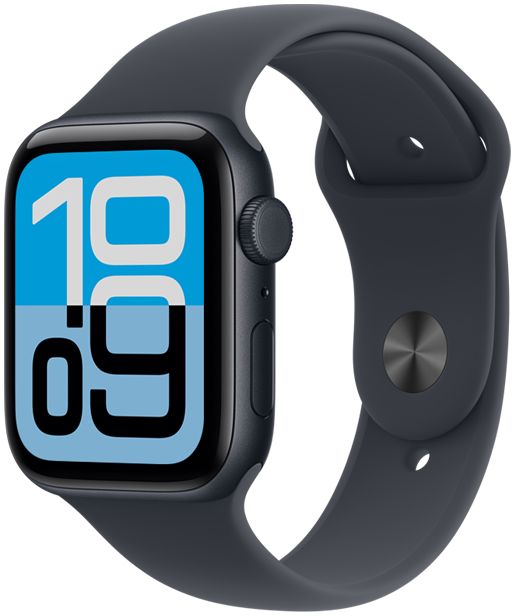
Good enough to survive a marathon block? Sure, with charging discipline. Good enough to top this list? No. The battery margin is too thin, the training tools are not there, and every other watch on this page does the actual job better.
Final Verdict
If you want one answer and do not enjoy overthinking, buy the Garmin Forerunner 265. If you want the smartest cheap answer, buy the COROS Pace 3. Everything else on this list is a niche branch off those two choices.
The Forerunner 165 is the Garmin-on-a-budget answer. The Pace 4 is the newer COROS AMOLED play. The Forerunner 955 is for battery hawks and trail-curious marathoners. But the top of the board is still the 265 first, Pace 3 second, and that is the ranking I would defend without hedging.
