

At a Glance: The Verdict
| Samsung Galaxy Watch 8 | Google Pixel Watch 4 |
|---|---|
|
Best For: Samsung Power Users The Galaxy Watch 8 remains the king of utility for Samsung phone owners. It offers deeper health metrics like Energy Score and better durability, but the base model’s battery life still lags slightly behind the Pixel. |
Best For: Android Purists & Style Google has finally nailed the battery life, offering 30 hours on the smaller model. With deeply integrated Fitbit tracking and a stunning minimalist design, it’s the smoothest Wear OS experience available today. |
Quick Buy Path
Check today’s pricing before you go deeper.
If these are already your two finalists, compare current pricing now, then keep reading for the full verdict.
The Android smartwatch market has never been more competitive. In 2025, both Samsung and Google have refined their flagship wearables to near-perfection, but they prioritize different users. Whether you value rugged utility and data density or sleek design and fluid software will determine the winner for your wrist.
Key Differences
- Ecosystem Integration: The Galaxy Watch 8 unlocks exclusive features (like ECG and blood pressure monitoring) only when paired with a Samsung phone, whereas the Pixel Watch 4 offers a consistent experience across all Android devices.
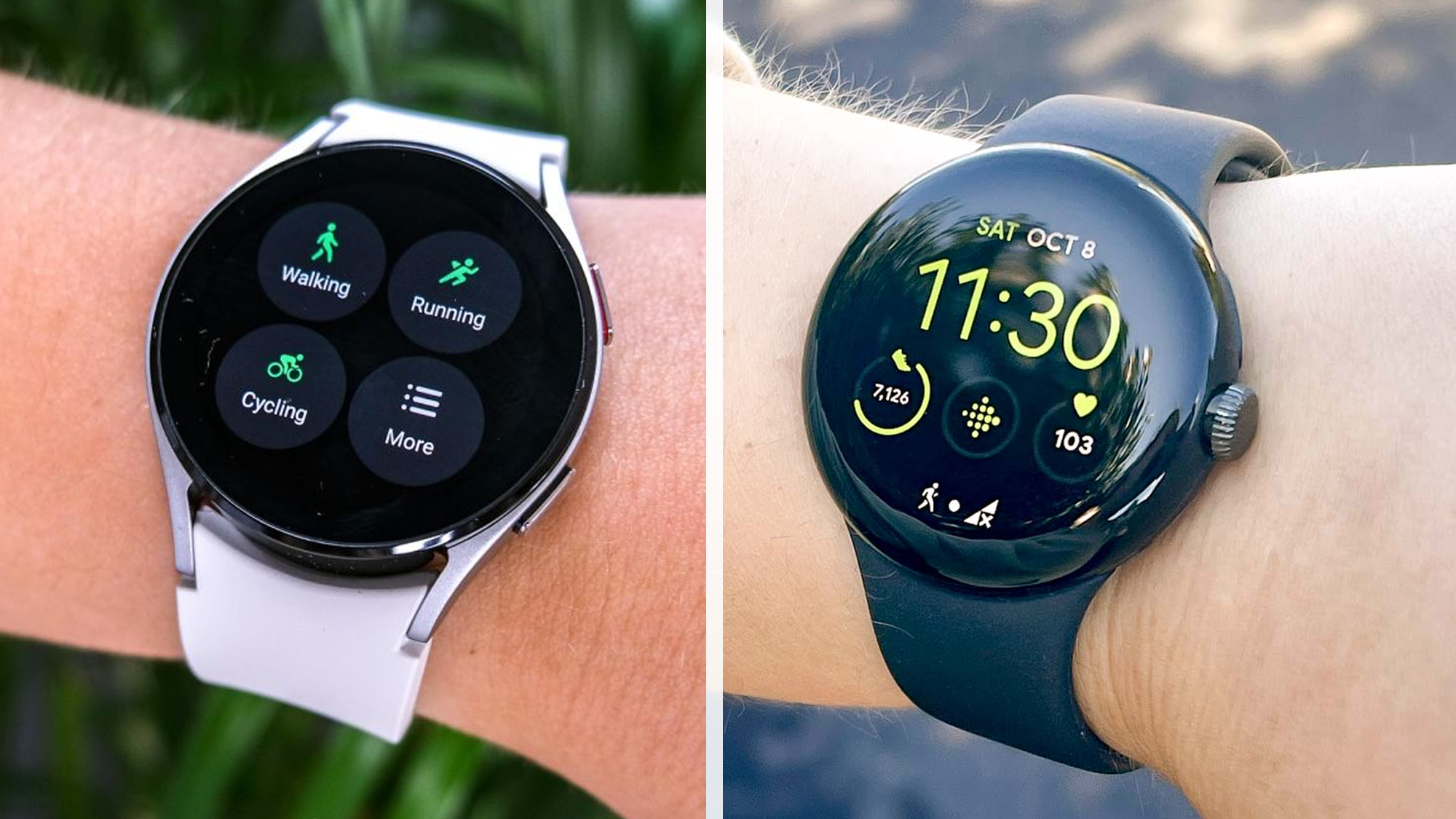
- Design Philosophy: Google sticks to its unique, domed “pebble” glass design using recycled aluminum, while Samsung offers a flat, armor aluminum build that feels more traditional and sporty.
- Health Tracking: Samsung leans on its BioActive Sensor for holistic health and body composition execution; Google relies on Fitbit’s industry-leading algorithms and clean app interface.
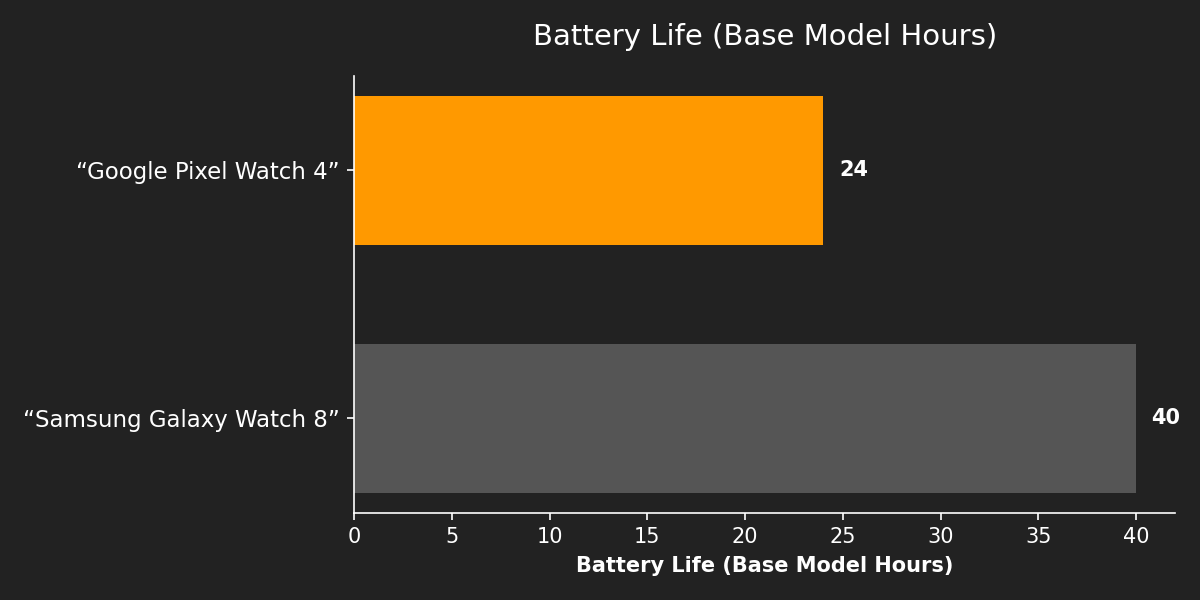
- Battery Baseline: For the first time, the smaller Pixel Watch 4 (41mm) officially claims a higher battery baseline (30 hours) than the typical real-world performance of the smaller Galaxy Watch 8 (approx. 26 hours).
Deep Dive Comparison
Design & Comfort
The Google Pixel Watch 4 continues to be the most stylish smartwatch on the market. Its domed glass flows seamlessly into the aluminum case, making it look more like a piece of jewelry than a gadget. It is exceptionally comfortable to sleep in due to its rounded edges. However, that exposed glass remains more prone to scratches and cracks compared to Samsung’s architecture.
The Samsung Galaxy Watch 8 retains its functional, industrial identity. It features a flat display protected by Sapphire Crystal, which is significantly more durable against everyday knocks. The “Armor Aluminum” casing feels sturdy, and the buttons have a tactile click that feels more premium during workouts. If you are rough on your gear, the Samsung is the safer bet.
Battery Life
Battery anxiety has been the Achilles’ heel for both brands in the past, but 2025 brings improvements. The Pixel Watch 4 now guarantees 30 hours of use with the Always-on Display enabled for the 41mm model, and up to 40 hours for the 45mm model. Samsung’s Galaxy Watch 8 (40mm) averages around 26 hours in real-world heavy usage, though its larger 44mm variant pushes closer to that 40-hour mark. Both watches now support fast charging, getting you through a day with just a 30-minute top-up.
Health & Fitness Features
This is a battle of Samsung Health vs. Fitbit. The Pixel Watch 4 utilizes Fitbit’s premium dashboard (some deep metrics require a subscription) to provide excellent sleep profiling and “Daily Readiness” scores. Its heart rate sensor is widely considered one of the most accurate for high-intensity interval training (HIIT).
The Galaxy Watch 8 is a data powerhouse. It offers Body Composition analysis (BIA), which estimates muscle and fat percentages directly from your wrist. It also includes “Energy Score,” Samsung’s AI-driven metric that rivals Fitbit’s readiness score but is free of charge. However, features like irregular heart rhythm notifications and sleep apnea detection work best (or only) with a Samsung phone.
Smart Features
Both watches run the latest version of Wear OS, but the flavor differs. The Pixel Watch 4 uses a “stock” version that is incredibly fluid and clutter-free, featuring deep integration with Google Assistant and Google Home.
The Galaxy Watch 8 runs One UI Watch on top of Wear OS. It is denser, more customizable, and allows you to stack widgets (Tiles) more aggressively. If you use a Samsung phone, the synergy is unmatched—modes sync instantly, and you can control your phone’s camera with a dedicated app that offers more controls than Google’s version.
Price & Value
Both watches start at a similar price point effectively. The Samsung Galaxy Watch 8 starts at $349, often seeing aggressive trade-in deals and bundles from Samsung. The Google Pixel Watch 4 also starts at $349 for the 41mm Wi-Fi model. While the starting price is identical, Samsung often offers better long-term value through durability and free health features that don’t require a monthly subscription.
Technical Specs Comparison
| Feature | Samsung Galaxy Watch 8 (40mm) | Google Pixel Watch 4 (41mm) |
|---|---|---|
| Display | 1.3″ Super AMOLED (Sapphire) | 1.2″ LTPO AMOLED (Doomed Glass) |
| Battery Life | ~26 Hours (Real World) | 30 Hours (Always-on Display) |
| Water Resistance | 5 ATM + IP68 | 5 ATM (IP68) |
| Weight | 28.7g | 31g |
| Starting Price | $349 | $349 |
The Verdict
- Buy the Samsung Galaxy Watch 8 if: You own a Samsung smartphone and want the most durable Android watch with comprehensive health data without a subscription fee.
- Buy the Google Pixel Watch 4 if: You want the smoothest software experience, prefer a smaller, more fashionable watch, or are deeply invested in the Fitbit ecosystem for your fitness tracking.
Ready to Decide?
Support our testing by checking the latest prices:
*We earn a commission if you make a purchase.
Specs and features may change. Always verify details on the manufacturer’s official site before purchasing.
