
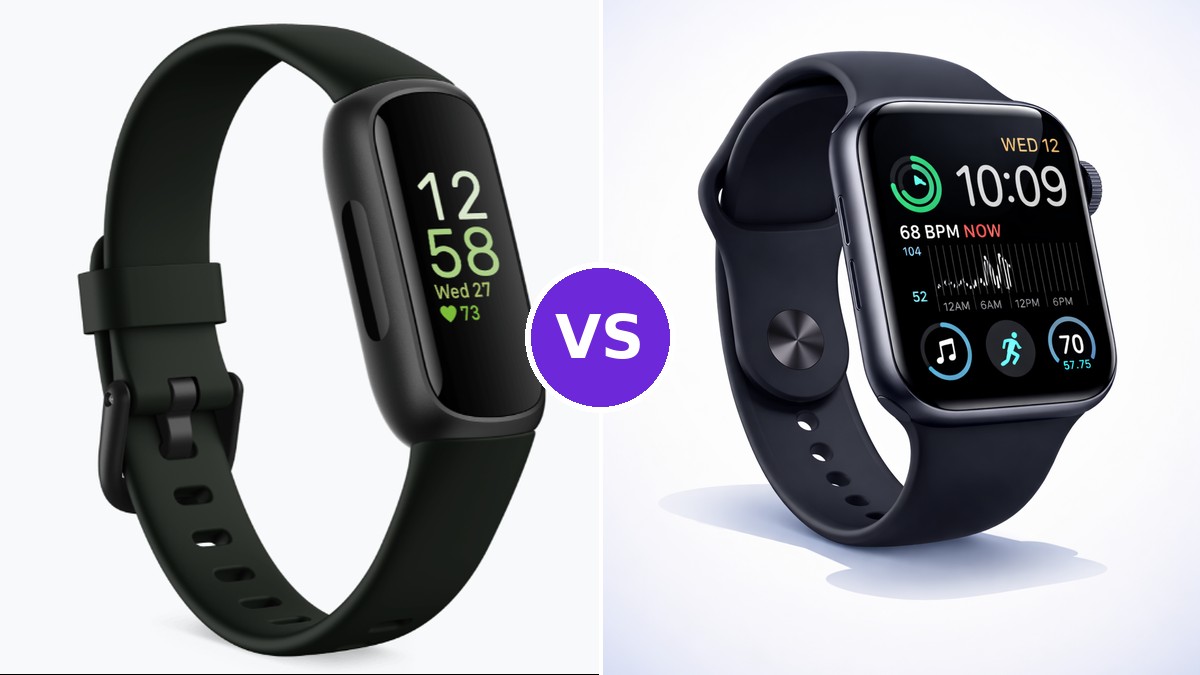
At a Glance: The Verdict
| Fitbit Inspire 3 | Inspire 2 |
|---|---|
|
Best For: New Buyers & Upgraders The Inspire 3 brings a vibrant color AMOLED screen, SpO2 tracking, and skin temperature sensing to Fitbit’s most affordable tracker. It’s lighter, has newer Bluetooth, and finally offers always-on display — making it the clear pick for anyone buying fresh. |
Best For: Inspire 2 Owners Staying Put The Inspire 2 still delivers solid step tracking, heart rate monitoring, and 10-day battery life. If yours is working fine and you don’t need SpO2 or a color screen, there’s no urgent reason to upgrade. If you find one heavily discounted, it remains a capable basic tracker. |
Quick Buy Path
Check today’s pricing before you go deeper.
If these are already your two finalists, compare current pricing now, then keep reading for the full verdict.
Introduction
The Fitbit Inspire line has long been the go-to entry point into fitness tracking — simple, slim, and affordable. With the Inspire 3 arriving in June 2022 as a direct successor to the 2020 Inspire 2, the question isn’t really which one is “better” (it’s the newer model), but whether the upgrades justify replacing a perfectly functional Inspire 2 on your wrist.
Key Differences
- Display: The Inspire 3 jumps to a color AMOLED touchscreen with an always-on option, replacing the Inspire 2’s basic grayscale PMOLED panel.
- Health Sensors: The Inspire 3 adds on-device SpO2 (blood oxygen) monitoring and skin temperature variation tracking — neither is available on the Inspire 2.
- Weight: The Inspire 3 is lighter at 24.5g versus the Inspire 2’s 30g.
- Connectivity: Bluetooth 5.0 on the Inspire 3 vs. Bluetooth 4.2 on the Inspire 2, offering faster and more reliable syncing.
- Availability: The Inspire 2 is discontinued and only available through remaining stock or resellers, often at a discount.
Deep Dive Comparison
Design & Comfort
Both trackers share Fitbit’s slim band form factor, but the Inspire 3 refines the package. It shaves off 5.5 grams, bringing it down to 24.5g — a subtle but noticeable improvement for all-day and sleep wear. The bigger visual upgrade is the color AMOLED screen, which makes glancing at stats far more pleasant than squinting at the Inspire 2’s grayscale display. The always-on display option on the Inspire 3 means you no longer need to flick your wrist to check the time. Both models are swim-proof to 50 meters and use interchangeable bands, so accessories carry over if you’re upgrading.
Battery Life
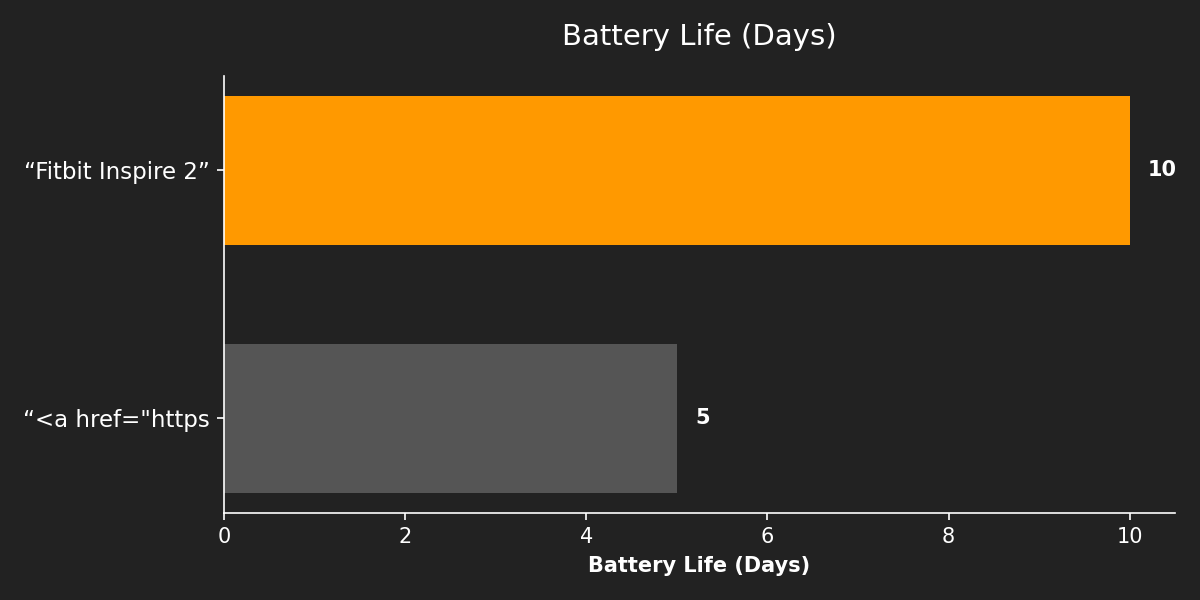
Fitbit rates both trackers at up to 10 days of battery life, which is impressive given the Inspire 3’s more power-hungry color display. In practice, enabling always-on display on the Inspire 3 will cut that to roughly 5–6 days — still solid, but worth noting. The Inspire 2, with its simpler screen, consistently hits that 10-day mark without any trade-offs. Neither tracker has built-in GPS, so there’s no GPS-mode battery metric to compare.
Health & Fitness Features
This is where the generational gap shows most clearly. The Inspire 3 adds two meaningful health sensors: SpO2 monitoring tracks blood oxygen levels during sleep, giving you insight into breathing quality and potential sleep disturbances. Skin temperature variation tracking helps identify trends that could indicate illness or cycle tracking patterns. The Inspire 2 has neither of these capabilities on-device.
Both trackers share the fundamentals — 24/7 heart rate monitoring, step counting, sleep tracking with sleep stages, and Active Zone Minutes. Exercise tracking covers 20+ modes on both, though neither has built-in GPS (both rely on connected GPS through your phone). Heart rate accuracy is comparable, using the same optical sensor technology.
Smart Features
Neither tracker is a smartwatch, but both handle notifications from your phone (calls, texts, apps). The Inspire 3’s color screen makes reading those notifications meaningfully easier. Both support Fitbit’s guided breathing sessions and goal celebrations. Neither model supports music storage, onboard music controls, or contactless payments — for those, you’d need to move up to the Fitbit Charge or Sense line. The Inspire 3’s Bluetooth 5.0 does provide a more stable connection for notification delivery compared to the Inspire 2’s Bluetooth 4.2.
Price & Value
The Fitbit Inspire 3 launched at $99.95 and is currently available at or near that price. The Inspire 2 launched at the same $99.95 but, being discontinued, can now be found for significantly less — often in the $50–$70 range through remaining retail stock. At full price, the Inspire 3 is the obvious choice with its superior display and added sensors. The value equation shifts only if you find an Inspire 2 at a deep discount and don’t care about SpO2, skin temperature, or a color screen.
Decided which one you want? Check the latest prices:
Technical Specs
| Spec | Fitbit Inspire 3 | Fitbit Inspire 2 |
|---|---|---|
| Release Date | June 2022 | September 2020 |
| Display | Color AMOLED (always-on) | Grayscale PMOLED |
| Weight | 24.5g | 30g |
| Water Resistance | 50m | 50m |
| Battery Life | Up to 10 days | Up to 10 days |
| Sensors | Optical HR, SpO2, Temp, Accelerometer | Optical HR, Accelerometer |
| Bluetooth | 5.0 | 4.2 |
| GPS | Connected (phone) | Connected (phone) |
| Price (Launch) | $99.95 | $99.95 |
The Verdict
Buying your first budget fitness tracker? Get the Fitbit Inspire 3. The color AMOLED display alone makes it a different experience from the Inspire 2’s grayscale screen, and the added SpO2 and skin temperature sensors bring genuine health tracking value at the same $99.95 price point. There’s no reason to buy the older model at full price.
Already own the Fitbit Inspire 2? Here’s whether you should upgrade. If your Inspire 2 is still going strong and you’re happy with basic step, sleep, and heart rate tracking, there’s no urgent need to replace it. The core fitness features are identical, and battery life matches. However, if you’ve been wanting blood oxygen insights, a screen you can actually read in sunlight, or the convenience of always-on display, the Inspire 3 delivers all three for $100. It’s a worthwhile upgrade the next time your Inspire 2 shows its age — but not one you need to rush into.
The bargain hunter’s angle: If you spot a Fitbit Inspire 2 for $50 or less, it’s still a perfectly capable basic tracker for someone who just wants steps, sleep, and heart rate without the frills. At that price, it remains one of the best entry-level fitness bands you can buy.
🏆 Ready to Decide?
Check the latest deals to see which one fits your budget.
*We earn a commission if you make a purchase.
Specs and features may change. Always verify details on the manufacturer’s official site before purchasing.
