
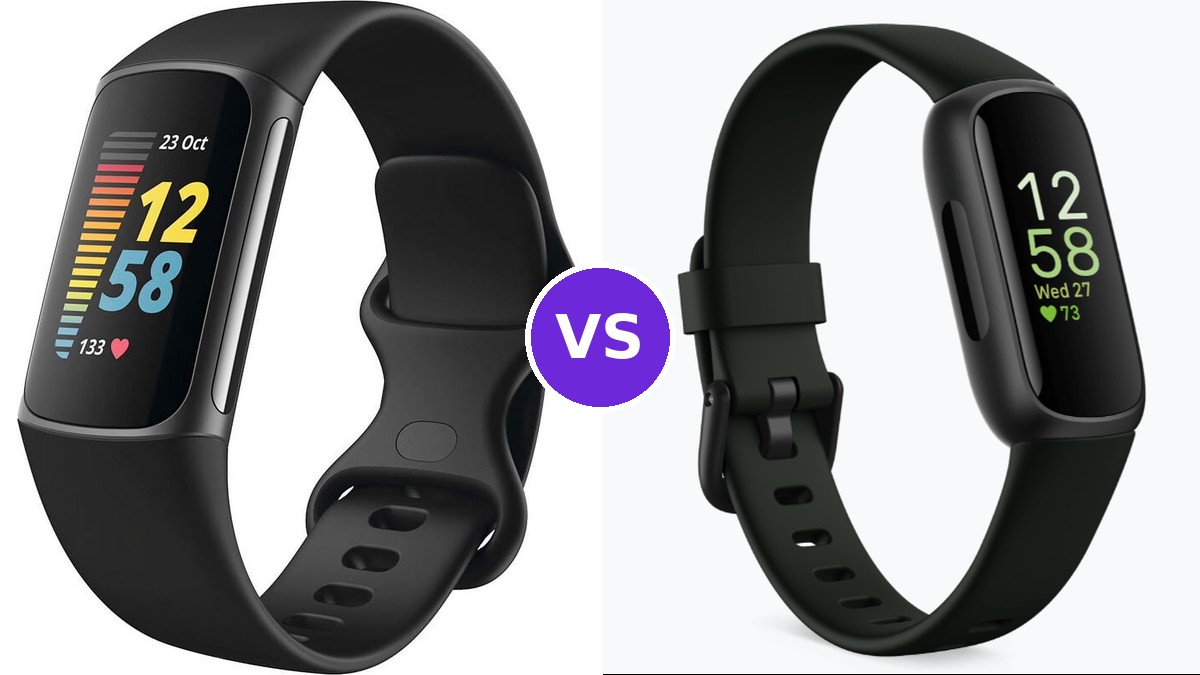
At a Glance: The Verdict
| Fitbit Charge 5 | Fitbit Inspire 3 |
|---|---|
|
Best For: Serious Health Tracking & Runners The Charge 5 brings premium smartwatch features like built-in GPS, ECG for heart rhythm, and EDA for stress management into a sleek tracker form factor. |
Best For: Budget Shoppers & Sleep Tracking The Inspire 3 is lightweight, affordable, and boasts an impressive 10-day battery life. It covers all the essentials without the premium price tag. |
When choosing between the Fitbit Charge 5 and the Fitbit Inspire 3, you are essentially deciding between a feature-rich health monitor and a streamlined, entry-level activity tracker. The Charge 5 acts as a bridge between a tracker and a smartwatch, while the Inspire 3 focuses on perfecting the basics of step counting and sleep analysis at a very attractive price point.
Key Differences
- GPS Connectivity: The Charge 5 features built-in GPS, allowing you to track runs without your phone. The Inspire 3 relies on “Connected GPS,” meaning you must carry your phone to map your route.
- Advanced Health Sensors: Only the Charge 5 includes the ECG app for heart rhythm assessment and the EDA Scan app for stress management.
- Convenience: The Charge 5 supports Fitbit Pay (NFC) for contactless payments; the Inspire 3 does not.
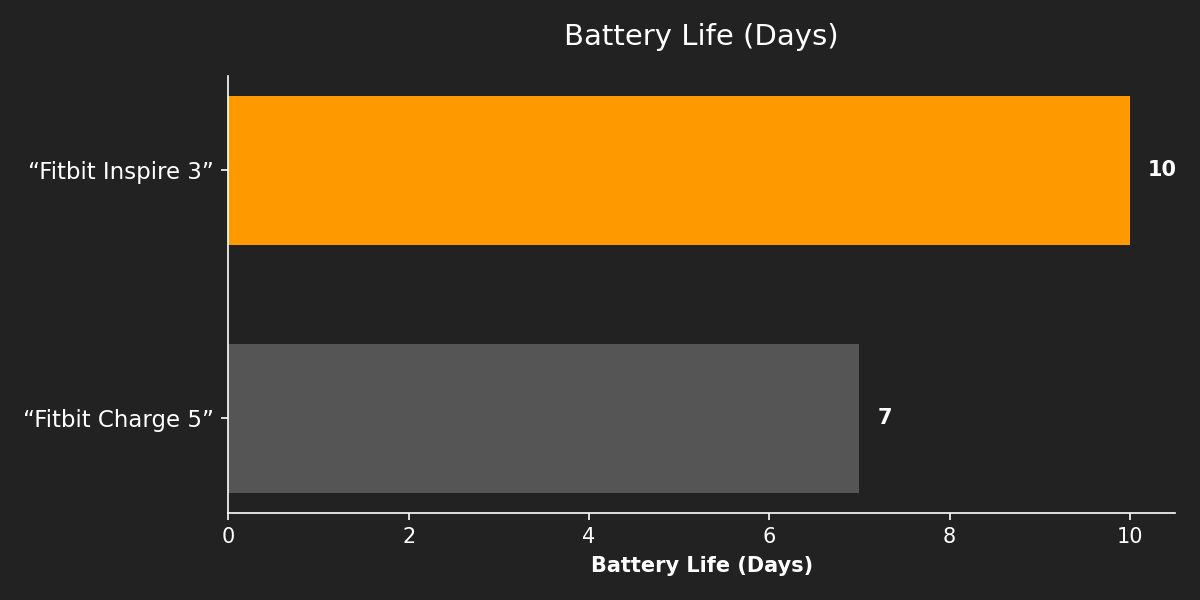
- Battery Life: The Inspire 3 outperforms the Charge 5, offering up to 10 days of battery compared to the Charge 5’s 7 days.
Deep Dive Comparison
Design & Comfort
Both devices feature vibrant AMOLED touchscreens, a significant upgrade from previous monochrome models. However, the Charge 5 offers a larger 1.04-inch display made with premium anodized aluminum and stainless steel. It feels more substantial on the wrist, weighing 28g.
The Inspire 3 is designed to disappear on your wrist. At just 17.69g and with a narrower 0.76-inch screen, it is significantly lighter and more unobtrusive, making it arguably more comfortable for 24/7 wear, especially while sleeping. The case is made of plastic, which keeps the weight down but feels less “premium” than the Charge 5.
Battery Life
Battery performance is a strong suit for both, but the Inspire 3 is the clear winner for endurance. While the Charge 5 offers a respectable 7 days (or up to 5 hours with continuous GPS usage), the Inspire 3 pushes that boundary to 10 days on a single charge.
Health & Fitness Features
This is where the Charge 5 justifies its higher price tag. It includes built-in GPS/GLONASS, which is critical for runners and cyclists who want accurate pace and distance tracking without lugging a phone around. It also features an ECG sensor to detect atrial fibrillation and an EDA sensor to track electrodermal activity (stress responses).
The Inspire 3 is no slouch, offering 24/7 heart rate monitoring, Active Zone Minutes, SpO2 (blood oxygen) tracking, and skin temperature variation. However, for outdoor exercise tracking, it is dependent on your phone’s GPS signal. If you simply walk or workout in a gym, this difference may not matter to you.
Smart Features
Both trackers handle notifications for calls, texts, and apps, but neither has a microphone or speaker for taking calls directly. The major differentiator here is NFC. The Charge 5 includes Fitbit Pay, allowing you to make contactless payments from your wrist—a convenient feature for grabbing a water or coffee post-run. The Inspire 3 lacks this hardware entirely.
Price & Value
The Charge 5 launched at $179.95, positioning it as a premium tracker. Ideally, you are paying for the onboard GPS and advanced health sensors. The Inspire 3 launched at $99.95, making it an exceptional value for users who want the Fitbit ecosystem and accurate sleep tracking without paying for features they might not use, like ECG or GPS.
Technical Specs Table
| Feature | Fitbit Charge 5 | Fitbit Inspire 3 |
|---|---|---|
| Launch Price | $179.95 | $99.95 |
| Battery Life | Up to 7 Days (5 hrs GPS) | Up to 10 Days |
| GPS | Built-in GPS + GLONASS | Connected (Phone Required) |
| Display | 1.04″ AMOLED | 0.76″ AMOLED |
| Water Rating | 5 ATM (50m) | 5 ATM (50m) |
| Sensors | Optical HR, SpO2, Skin Temp, EDA, ECG | Optical HR, SpO2, Skin Temp |
| Payments | Fitbit Pay (NFC) | None |
The Verdict
If you are a runner or someone who wants the most comprehensive health data available (including heart rhythm and stress analysis), the Fitbit Charge 5 is the superior choice. The built-in GPS and larger screen justify the price jump for active users.
However, if your primary goal is general wellness—tracking steps, sleep, and heart rate—without the need for independent GPS tracking, the Fitbit Inspire 3 is the better buy. It offers superior battery life, a lighter profile, and saves you significantly at checkout.
🏆 Ready to Decide?
Check the latest deals to see which one fits your budget.
*We earn a commission if you make a purchase.
Specs and features may change. Always verify details on the manufacturer’s official site before purchasing.
