
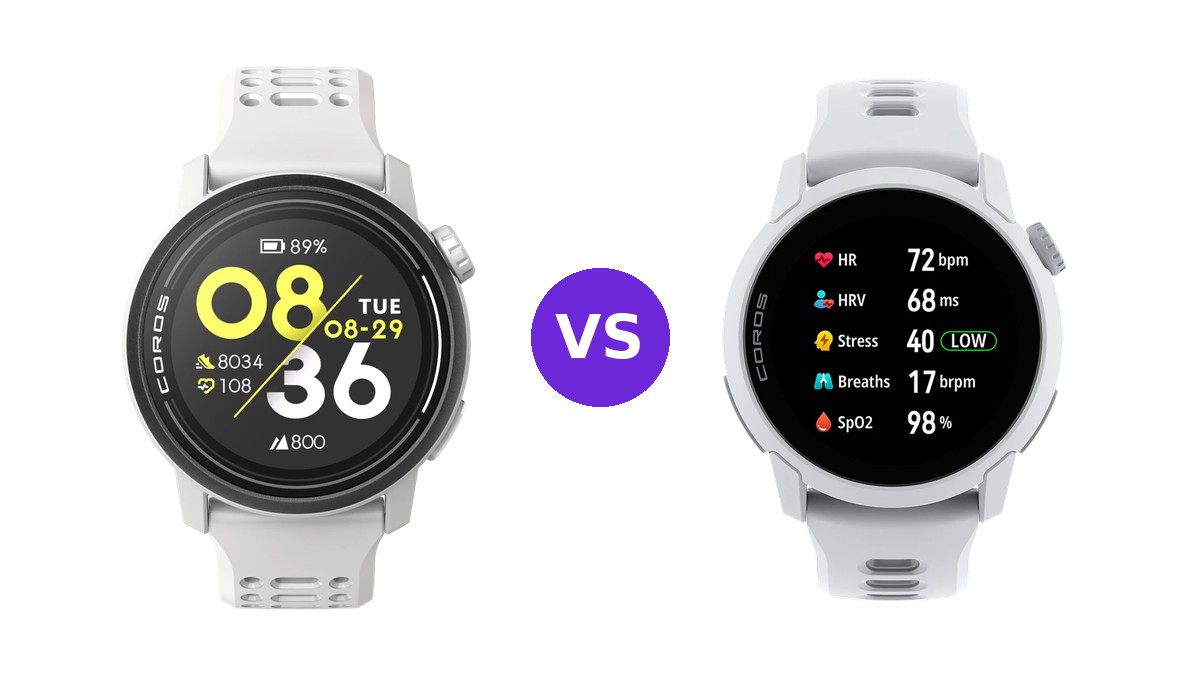
At a Glance: The Verdict
| COROS Pace 3 | COROS Pace 4 |
|---|---|
|
Best For: Budget runners hunting a discount The 2023 Pace 3 is still a serious training watch with multi-band GPS and a 30-gram build. At its discounted street price, it is the value pick for anyone who does not care about an AMOLED screen. |
Best For: New buyers who want the latest Pace The 2025 Pace 4 adds a sharp AMOLED display, a built-in mic and speaker, and longer battery life for only $20 more at launch. This is the default pick for anyone buying fresh. |
Quick Buy Path
Check today’s pricing before you go deeper.
If these are already your two finalists, compare current pricing now, then keep reading for the full verdict.
COROS just dropped the Pace 4, and anyone eyeing a Pace 3 now has to ask the obvious question: is the new one worth the extra cash, or is the older model the smarter buy at its post-launch discount? Both are lightweight, multi-band GPS running watches, but the gap between them is bigger than the $20 launch price difference suggests.
Key Differences
- Display: Pace 4 has a 1.2-inch AMOLED at 390 x 390 pixels. Pace 3 uses a 1.2-inch always-on Memory LCD at 240 x 240.
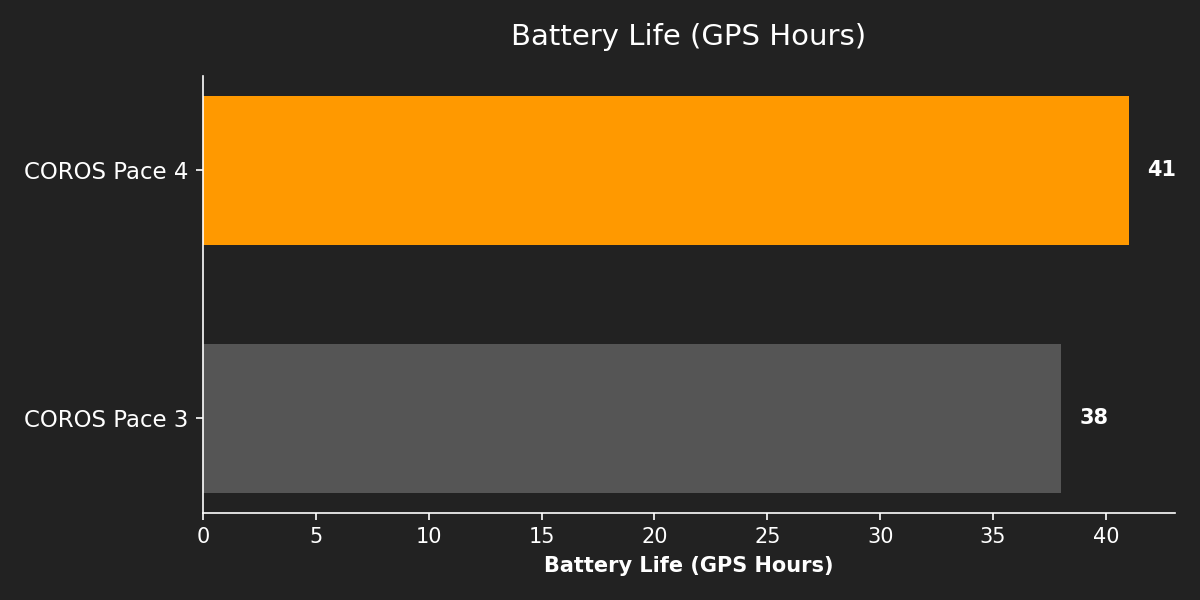
- Battery life: Pace 4 runs 456 hours in smartwatch mode and 41 hours with multi-band GPS. Pace 3 posts 360 hours and 38 hours.
- Voice hardware: Pace 4 adds a built-in microphone and speaker. Pace 3 has neither.
- Size and weight: Pace 4 is 43.4mm and 32 grams. Pace 3 is 41.9mm and 30 grams.
- Launch price: Pace 4 launched at $249. Pace 3 launched at $229 and is now routinely discounted.
- Unchanged: Both use multi-band GPS, 5 ATM water rating, 4GB storage, Bluetooth plus Wi-Fi, and fiber-reinforced polymer cases. Neither has NFC payments.
Deep Dive Comparison
Design & Comfort
Both watches keep the Pace line’s signature ultralight feel. The Pace 3 is 30 grams in a 41.9mm case, which is close to unnoticeable on the wrist during long runs. The Pace 4 bumps up to 32 grams and 43.4mm to accommodate the brighter AMOLED panel and voice hardware. Two grams and 1.5mm is a real but minor change — small-wristed runners may prefer the Pace 3’s more compact footprint. Both use fiber-reinforced polymer cases with a 5 ATM water rating, so durability is a wash.
Battery Life
This is where the generational jump actually surprises. The Pace 4 gets 456 hours in daily smartwatch mode and 41 hours with multi-band GPS tracking. The Pace 3 delivers 360 hours and 38 hours. Normally AMOLED displays cost battery life, so gaining nearly four days of standby and another few hours of GPS while upgrading the screen is a genuine engineering win.
Health & Fitness Features
Both watches carry COROS’s full training sensor stack: optical heart rate, barometric altimeter, accelerometer, gyroscope, 3D compass, thermometer, and SpO2 for blood oxygen readings. Both use dual-frequency multi-band GPS, which is the same tier of positioning hardware found in watches costing two or three times as much. For actual run tracking, power metrics, and training load analysis inside the COROS app, there is no meaningful fitness gap between these two. The Pace 4 does not add new biometric sensors.
Smart Features
Here the Pace 4 pulls ahead clearly. It adds a built-in microphone and speaker, opening the door to on-wrist audio features like voice notes, call audio, or future voice-driven controls. The Pace 3 has neither. Neither watch includes NFC payments, so tap-to-pay is still off the table on both. Both support Bluetooth and Wi-Fi and carry 4GB of onboard storage for offline music.
Price & Value
The Pace 4 launched at $249 and the Pace 3 launched at $229 — only a $20 gap at MSRP. But the Pace 3 has been on the market since August 2023, and street prices have drifted well below its launch tag. If you can pick up a Pace 3 for $170 to $190, the value math shifts hard in its favor for runners who do not care about AMOLED or voice hardware. At full price, though, paying $20 more for the Pace 4 is an easy call.
Technical Specs
| Spec | COROS Pace 3 | COROS Pace 4 |
|---|---|---|
| Release Date | August 2023 | November 2025 |
| Launch Price | $229 | $249 |
| Case Size | 41.9mm | 43.4mm |
| Weight | 30 g | 32 g |
| Display | 1.2-inch Memory LCD, 240 x 240 | 1.2-inch AMOLED, 390 x 390 |
| Water Rating | 5 ATM | 5 ATM |
| Smartwatch Battery | 360 hours | 456 hours |
| GPS Battery (Multi-band) | 38 hours | 41 hours |
| GPS | Multi-band | Multi-band |
| Sensors | HR, Altimeter, Accel, Gyro, Compass, Thermo, SpO2 | HR, Altimeter, Accel, Gyro, Compass, Thermo, SpO2 |
| Mic & Speaker | No | Yes |
| NFC Payments | No | No |
| Storage | 4GB | 4GB |
The Verdict
Buy the COROS Pace 4 if you are a new buyer. A sharper AMOLED display, longer battery life in both smartwatch and GPS modes, and a built-in mic and speaker for only $20 more than the Pace 3’s launch price is a clean win. This is the default pick.
Buy the COROS Pace 3 if you are chasing a deal. At a discounted street price, you still get multi-band GPS, the full COROS training sensor stack, and the same lightweight build. If the Memory LCD screen and missing voice hardware do not bother you, it is the better value.
Skip the upgrade if you already own a Pace 3. The sensor stack, GPS quality, and training features are functionally identical. The jump to Pace 4 is a display and voice upgrade, not a performance upgrade. Unless you specifically want AMOLED or the mic and speaker, keep your Pace 3 and spend the $249 elsewhere.
🏆 Ready to Decide?
Check the latest deals to see which one fits your budget.
*We earn a commission if you make a purchase.
Specs and features may change. Always verify details on the manufacturer’s official site before purchasing.
