
At a Glance: The Verdict
| Fitbit Charge 6 | Xiaomi Smart Band 10 |
|---|---|
|
Best For: Serious fitness tracking with built-in GPS and health monitoring The Charge 6 is Fitbit’s most advanced tracker, packing GPS, ECG, EDA stress sensing, and NFC payments into a slim band. It’s the pick for runners and health-conscious users who want accurate data without carrying a phone. |
Best For: Budget-friendly daily activity and sleep tracking At just $35, the Smart Band 10 delivers a larger AMOLED screen, three weeks of battery life, and essential fitness tracking. It’s the best value pick for casual users who want the basics done well. |
Quick Buy Path
Check today’s pricing before you go deeper.
If these are already your two finalists, compare current pricing now, then keep reading for the full verdict.
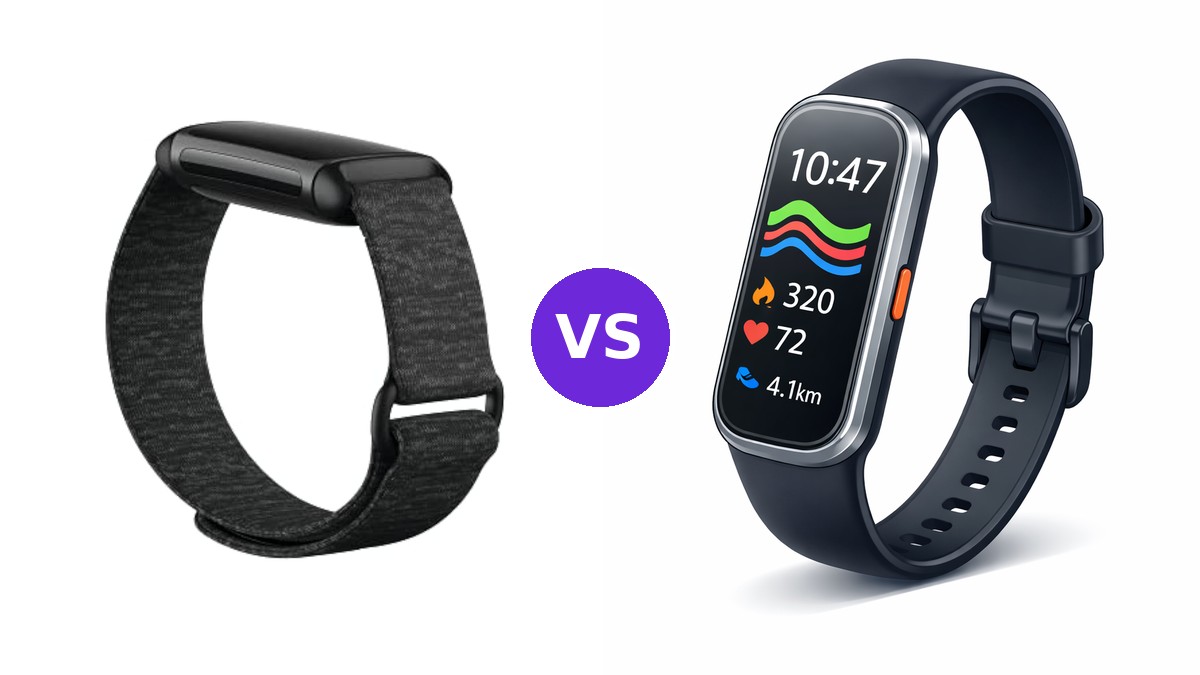
The Fitbit Charge 6 and Xiaomi Smart Band 10 sit at opposite ends of the fitness tracker spectrum. One is a feature-rich health companion priced at $160; the other is a minimalist band that costs about the same as a nice lunch. Both strap to your wrist and count steps, but the similarities end there quickly.
Key Differences
- GPS: The Charge 6 has built-in GPS with GLONASS for phone-free run tracking. The Smart Band 10 has no GPS at all — you need your phone for route mapping.
- Health sensors: Fitbit includes ECG, EDA (electrodermal activity for stress), and a skin temperature sensor. Xiaomi sticks to the basics: heart rate and SpO2.
- NFC payments: The Charge 6 supports Google Wallet for tap-to-pay. The Smart Band 10 does not.
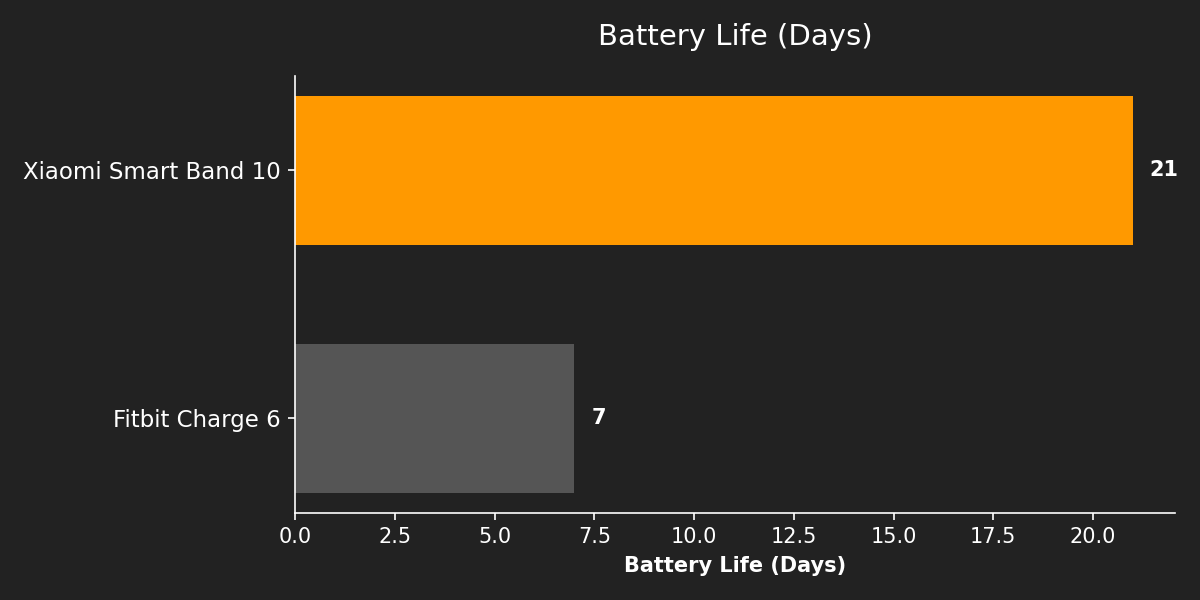
- Battery life: Xiaomi dominates here with up to 21 days versus Fitbit’s 7 days (and just 5 hours with GPS active).
- Display size: The Smart Band 10 has a noticeably larger 1.72-inch screen compared to the Charge 6’s compact 1.04-inch panel.
- Price: The Smart Band 10 costs $35 — less than a quarter of the Charge 6’s $160 price tag.
Deep Dive Comparison
Design & Comfort
The Fitbit Charge 6 uses an aluminum and glass build that feels more premium on the wrist. At 30g, it’s heavier than the Xiaomi but still comfortable for all-day wear. Fitbit’s slim, elongated form factor tucks neatly under shirt cuffs.
The Xiaomi Smart Band 10 is a featherweight at just 16g thanks to its polycarbonate body. You genuinely forget it’s there, which makes it one of the most comfortable sleep trackers on the market. Its larger 1.72-inch AMOLED display (212 x 520 resolution) is actually easier to read than the Charge 6’s smaller 1.04-inch screen (184 x 276), though Fitbit’s panel is sharper relative to its size.
Both carry a 5 ATM water resistance rating, so showers and pool laps are fair game for either.
Battery Life
This is where the gap is massive. The Xiaomi Smart Band 10 lasts up to 21 days on a single charge — you can go nearly a month between top-ups with lighter use. The Fitbit Charge 6 manages about 7 days in smartwatch mode, which drops to roughly 5 hours when GPS is running continuously.
If you run with GPS three times a week for 45 minutes each session, the Charge 6 still gets through a full week. But it can’t touch Xiaomi’s set-it-and-forget-it endurance.
Health & Fitness Features
The Charge 6 is in a different league for health monitoring. Its sensor suite includes an optical heart rate monitor, SpO2, ECG for heart rhythm assessment, EDA for stress tracking, and a skin temperature sensor. It also integrates with Google’s ecosystem, giving you detailed health reports in the Fitbit app.
Built-in GPS with GLONASS means the Charge 6 can map your runs, walks, and rides without your phone. Pace, distance, and route data are accurate enough for most recreational athletes.
The Smart Band 10 covers the essentials — continuous heart rate monitoring, blood oxygen tracking, and step/sleep tracking — but that’s the ceiling. There’s no GPS, no ECG, no stress sensing, and no temperature monitoring. For basic daily activity tracking it’s perfectly adequate, but serious fitness users will feel the gaps.
Smart Features
The Charge 6 supports NFC payments through Google Wallet, which is a genuine convenience when you’re out on a run and want to grab a coffee on the way home. It handles smartphone notifications and offers some on-wrist app controls.
The Smart Band 10 delivers notifications from your phone and basic music controls, but there’s no NFC and no payment support. Both devices lack a microphone and speaker, so neither takes calls.
Connectivity is comparable — Bluetooth on both, with the Smart Band 10 running the newer Bluetooth 5.4 standard versus the Charge 6’s older Bluetooth version.
Price & Value
The Fitbit Charge 6 launched at $160 and typically sells for $130–$150 depending on the retailer. The Xiaomi Smart Band 10 debuted at $35 and often dips below $30 during sales.
You could buy four Smart Band 10s for the price of one Charge 6. The question is whether GPS, ECG, EDA, NFC payments, and Fitbit’s deeper health analytics are worth that four-to-one premium to you. For casual step-counters, the answer is usually no. For runners and health-focused users, the Charge 6’s extras justify the cost.
Technical Specs
| Spec | Fitbit Charge 6 | Xiaomi Smart Band 10 |
|---|---|---|
| Display | 1.04″ AMOLED (184 x 276) | 1.72″ AMOLED (212 x 520) |
| Weight | 30g | 15.95g |
| Materials | Aluminum, glass, resin | Polycarbonate |
| Water Rating | 5 ATM | 5 ATM |
| GPS | Built-in (GPS + GLONASS) | None |
| Battery (Smartwatch) | Up to 7 days | Up to 21 days |
| Battery (GPS) | Up to 5 hours | N/A |
| Sensors | HR, SpO2, ECG, EDA, Temp, Accelerometer | HR, SpO2, Accelerometer |
| NFC Payments | Yes (Google Wallet) | No |
| Launch Price | $160 | $35 |
The Verdict
Buy the Fitbit Charge 6 if you run or cycle regularly and want phone-free GPS tracking. It’s also the right choice if you value advanced health metrics like ECG, stress monitoring, or skin temperature trends — or if tap-to-pay from your wrist matters to you. The Charge 6 is the better fitness tool for anyone who actively trains.
Buy the Xiaomi Smart Band 10 if you want a comfortable, set-and-forget activity tracker that handles steps, sleep, and heart rate without fuss. At $35, it’s an absurdly good deal for casual users who don’t need GPS or advanced health sensors. The three-week battery life and larger screen are genuine advantages for everyday wear.
The bottom line: the Charge 6 is a fitness tracker that happens to be a band; the Smart Band 10 is a band that happens to track fitness. Pick based on how seriously you train.
🏆 Ready to Decide?
Check the latest deals to see which one fits your budget.
*We earn a commission if you make a purchase.
Specs and features may change. Always verify details on the manufacturer’s official site before purchasing.
